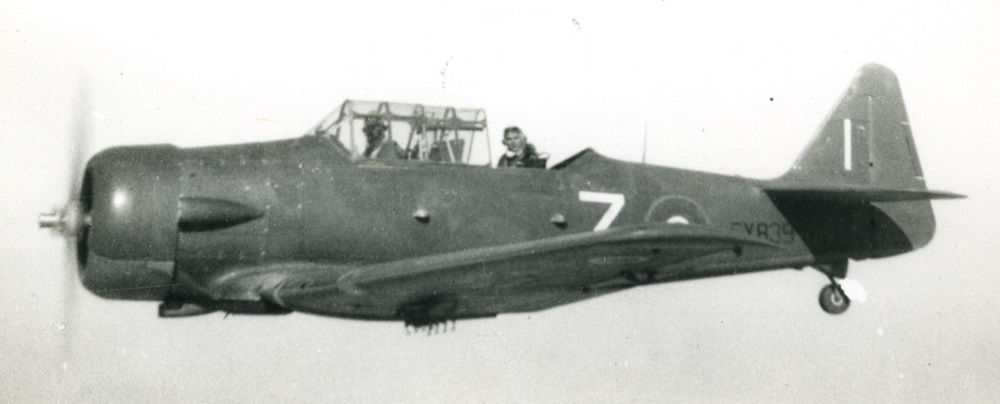
73 OTU EX839 '7' in air. Note it has 'light stores carriers' under the wings. Image: Jack Curtis via Dominic O'Donnell.
by Steve Mackenzie
73 OTU EX839 '7' in air. Note it has 'light stores carriers' under the wings. Image: Jack Curtis via Dominic O'Donnell.
Jack Curtis is well known as the pilot of the Dakota National Air (also known as Dakotas Down Under and Discovery Air Tours) DC-3 which gave joy flights out of Sydney (Bankstown Airport). But he had an earlier career flying Kittyhawk Mk.IVs (P-40Ns) with 250 Sqn RAF late in WW.II (and later with 450 Sqn RAAF postwar until they returned to Australia in Aug 1945) which is virtually unknown by most people. Their used to be a detailed biography on 'https://aviationwriter.org/' but that sight appears to no longer exist (at least I could not get it to load).
Jack was one of the later RAAF fighter pilots to leave for service in the Middle East. I was unable to bring up details via an Internat search but know that he was undertaking training at 73 OTU at Fatid in the 2nd half of 1944.
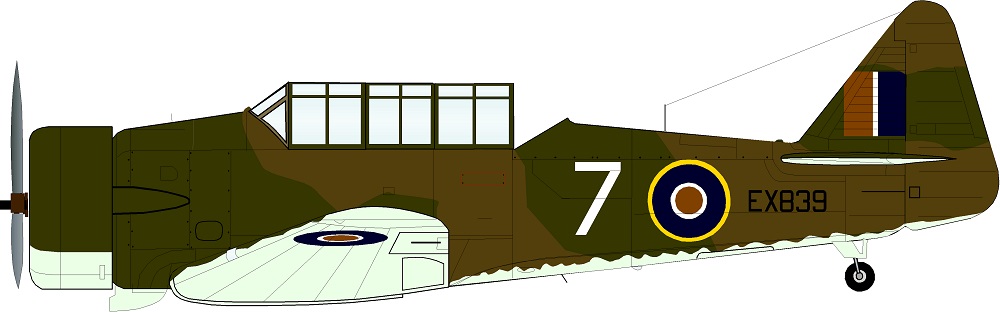
Harvard II EX839 of 73 OTU. Temperate scheme (Dark Green/ Dark Earth/ Sky) with standard RAF roundels of the time. Black serial and White individual letter #7. Typical of the Harvards he would have flown at 73 OTU during his training.
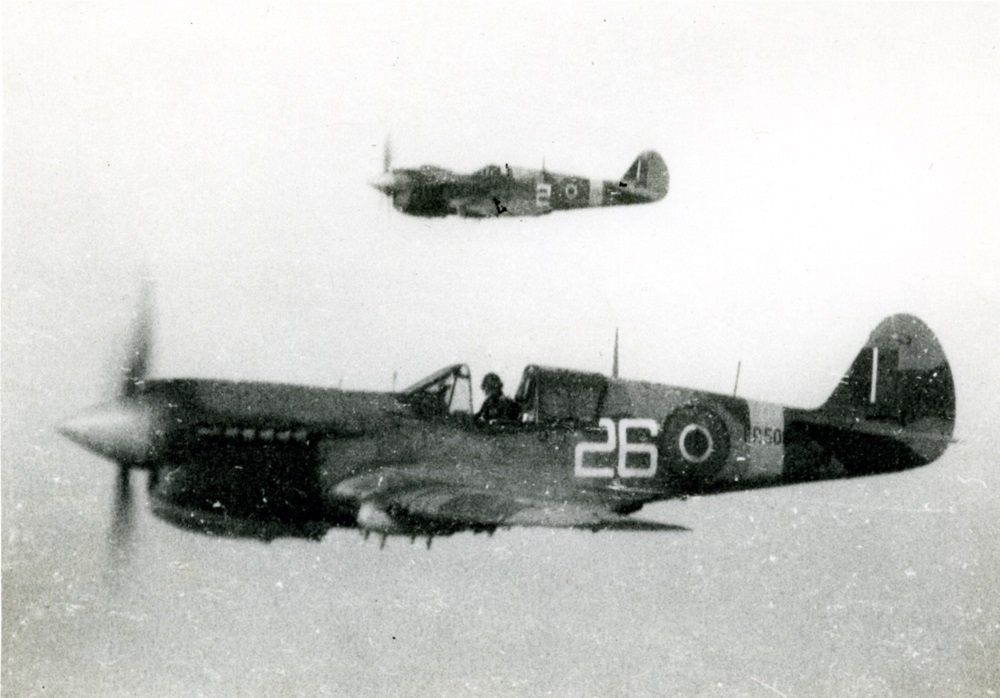
73 OTU Kittyhawk Mk.IIIs #26 and #2 in flight. These are long fuselage P-40K variants. Image: Jack Curtis via Dominic O'Donnell.
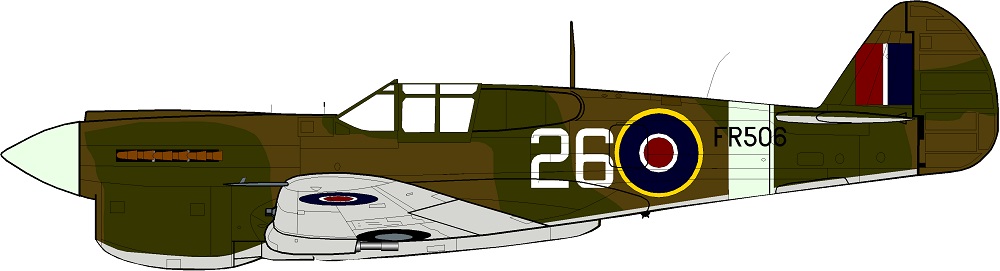
Kittyhawk Mk.III #26 FR506 of 73 OTU. Temperate scheme (Dark Green/ Dark Earth/ Light Gray) with standard RAF roundels of the time. Black serial and White individual letter #26. Unusually the 'ANA Sky' fuselage band and spinner (as painted at the factory) remain. I have seen RAF Kittyhawks retaining the band before but they commonly had the spinner painted Red.
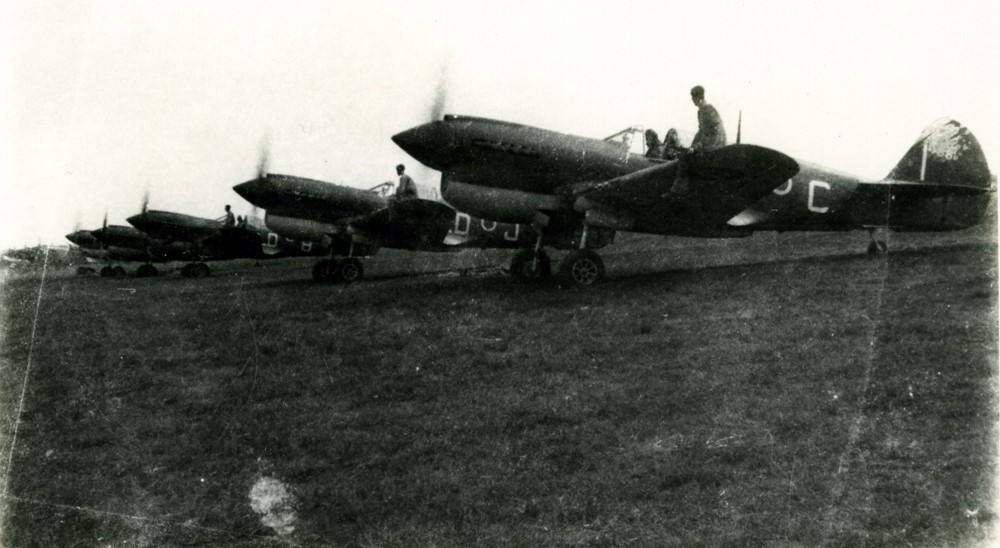
Kittyhawk Mk.IV LD-C In Lineup. Image: Jack Curtis via Dominic O'Donnell.
After graduating from the course at 73 OTU he was posted to 250 Sqn RAF to fly Kittyhawk Mk.IV (P-40N) fighters in Northern Italy. He is known to have flown LD-C. I do not know the serial for sure but it was possibly FX781 of which there is a known photo as LD-C.
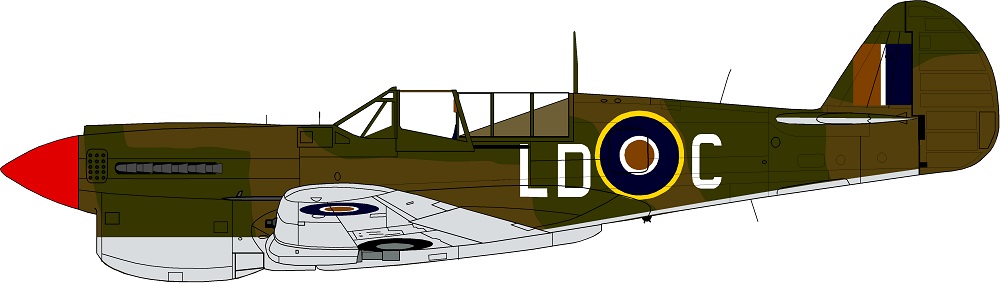
Kittyhawk Mk.IV LD-C of 250 Sqn. Temperate scheme (Dark Green/ Dark Earth/ Light Gray) with standard RAF roundels of the time. Black serial and White Codes. Red Spinner
When VE day came in May 1945, RAAF personnel started being repatriated back to Australia based on a system of 'points'. Criteria to accumulate points was things such as length of time O/S, marraige, number of children etc. Jack Curtis being single and recently arrived in the M.E was well down the list. 3 and 450 sqns RAAF were not disbanded as the intention was to post the Sqns to the Pacific as going concerns. To that end repatriated personel were replaced by other RAAF guys who were not in line yet for repatriation. Jack Curtis was posted to 450 Sqn.
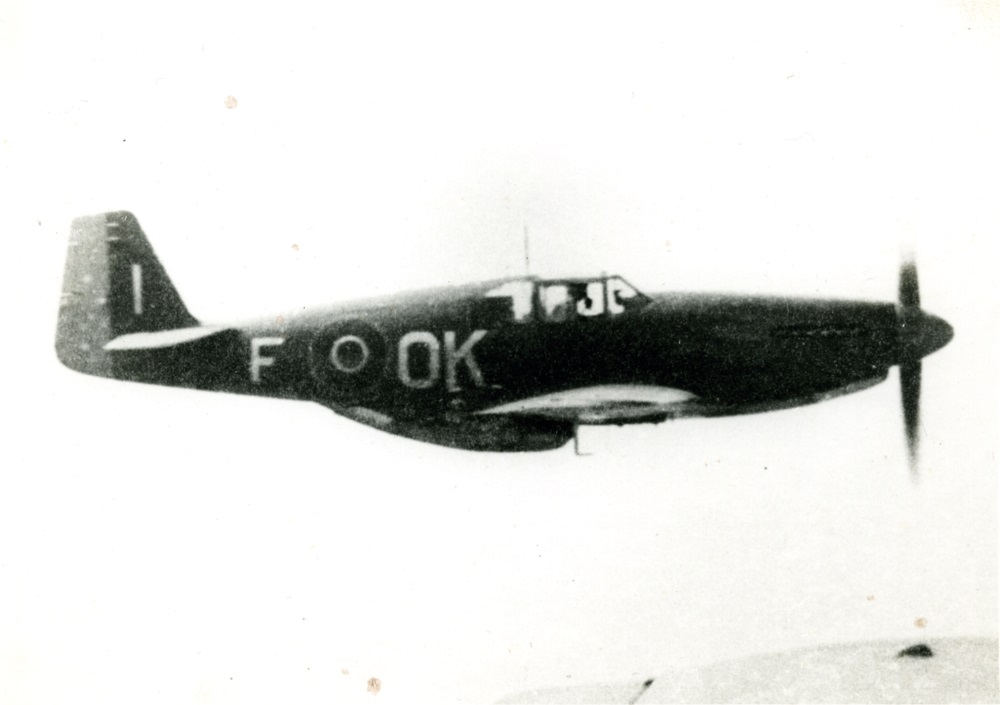
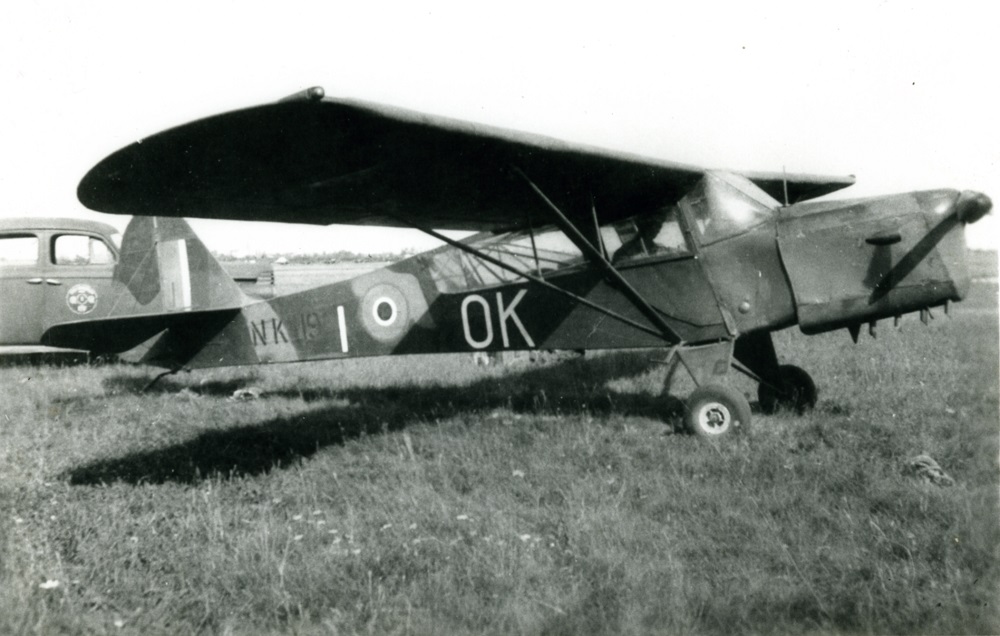
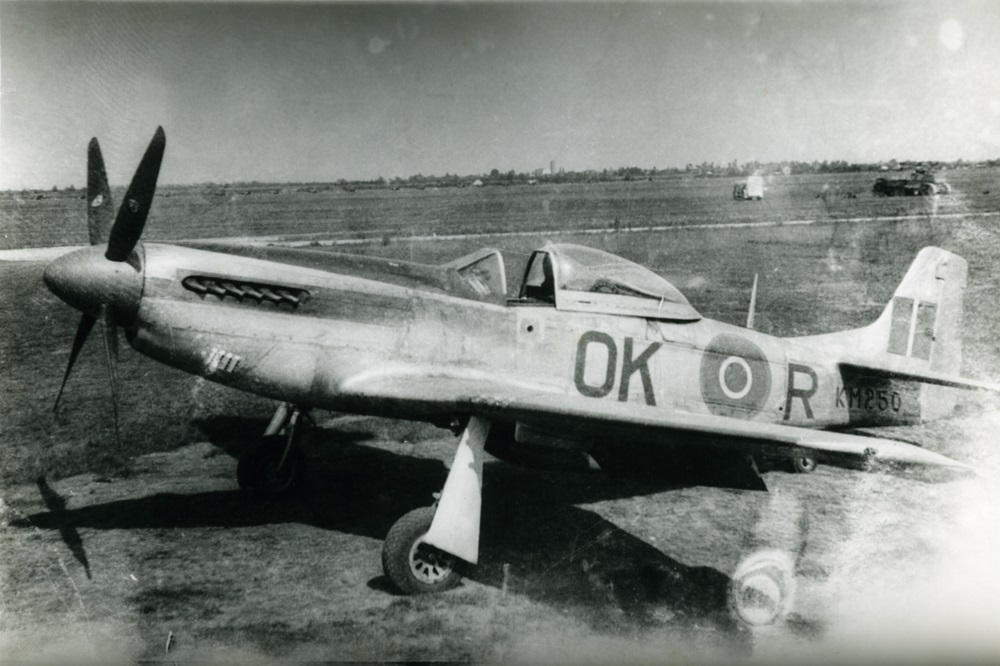
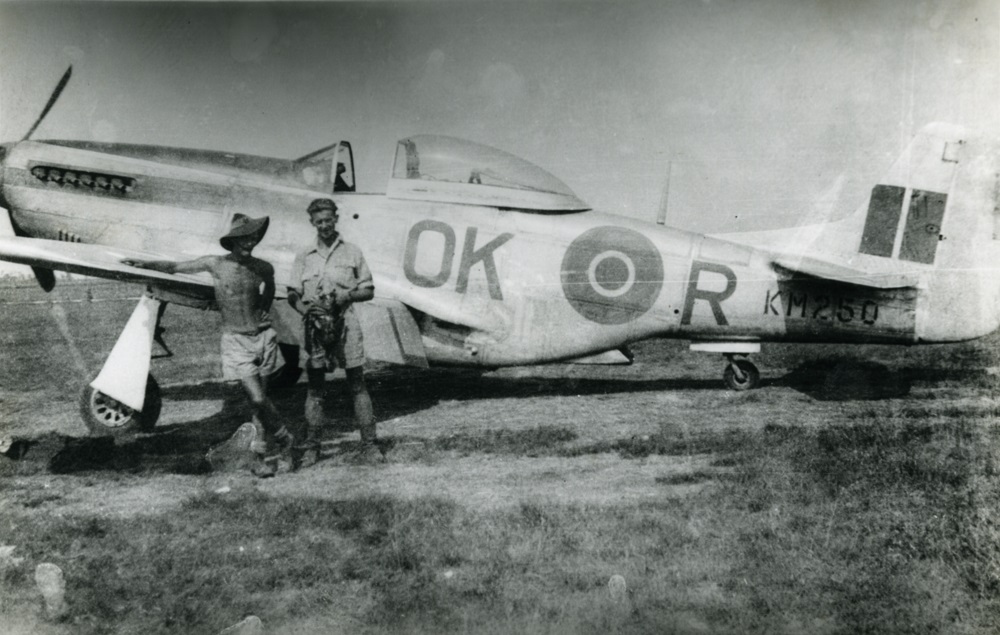
In amongst his photo collection were a number of very useful images of 450 airfames. These have all been run before in various articles I have written in this magazine but are repeated here for those who are not familiar with them. All images Jack Curtis via Dominic O'Donnell (thanks Dom for passing these along to me many years ago).
| 
| 
|
| 
|
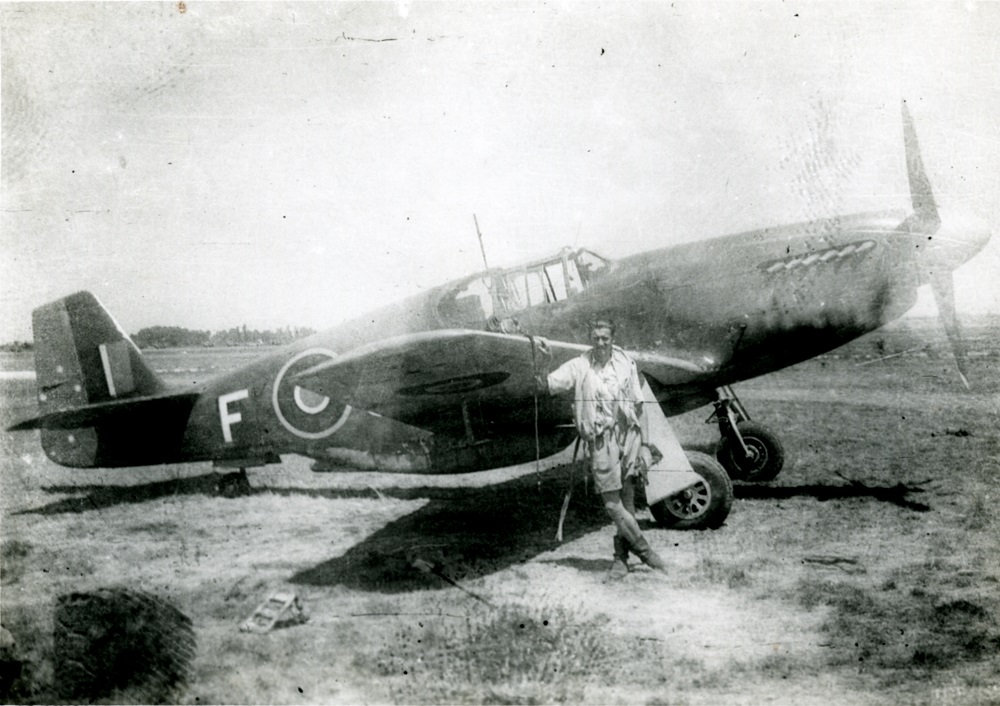
a. 1st & 2nd images are of Mustang MK.III OK-F FB244. This was a hand down from 3 Sqn RAAF, thus the 'Southern Cross' on the rudder.
b. 3rd image is of an Auster that was assembled post war by 450 Sqn from two wrecks taken from a airframe dump.
c. 4th and 5th images are of Mustang IVa OK-R KM250 which was the only Mk.IVa amongst the small number of Mustangs used alongside P-40Ns post May 1945 for training. Jack Curtis can be seen in two of the Mustang images.
Click on the 'Next' button to go to Page 2 of the article